Where does your organization stand right now? The model below shows you.
AI Maturity Model
AI moves through an organization in three stages, from individual use to organizational learning.
| AI advises | AI acts | The organization learns | |
|---|---|---|---|
| What happens | AI supports human judgment. People use it to draft, analyze, and think inside their existing roles, then decide what happens next. | AI executes bounded work. Agents use context and tools to complete multi-step tasks, operating within permissions people set. | Outcomes feed back across the organization. Agents, workflows, and decisions keep improving from measured results. |
| Organization | People adapt | Work is redesigned | The organization is redesigned |
Maturity is uneven. Customer service can be at the acting stage while finance is still advising. Assess it function by function before you assess the company.
My approach
AI moves faster than any organization can absorb it. I help leaders close that gap.
Returns follow a sequence. Leadership grants permission to change. Culture makes experimentation safe. Redesigned work turns what people learn into results. Technology makes the new way reliable. Skip the first step and the rest stalls, which is why buying tools produces so little.
I work with the people who can change how the company operates.
I meet organizations where they actually are.
I set the change in motion, and the company carries it.
I teach the technology directly, using what's current.
Process
-
The why
Understand
I start with your goals, and the technology follows.
-
The what
Define
I shape an approach specific to your organization.
-
The how
Deliver
Strategy vision workshops, hands-on training, hackathons.
Sustain
I stay engaged on retainer, tracking progress and adjusting as we go.
AI Product Strategy Advisory
AI changes what a product can become, and who gets to build it. I help product teams work out which of these applies to them.
A SaaS product becomes an MCP endpoint. Customers point their own AI at it and build the workflows, dashboards, and connections they need.
Everybody ships. Product managers and designers build working features, and engineering shifts toward the architecture that keeps it safe.
Opening the product invites the moat question. What stays yours is the data you hold, the actions only your product can take, and the accountability that comes with them.
Seats stop being the unit once agents do the work. Access and usage come first, then outcome pricing, once customers see the value and you can define it.
About
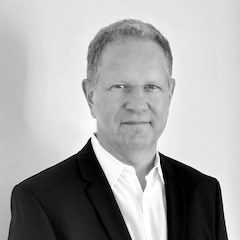
Cyrill Glockner is a technology executive, speaker, and advisor focused on AI. His career spans startups and large companies, including Bonsai AI and Microsoft, which acquired the startup. Across these roles, he has built products and led product strategy and partnerships. Today, he helps leaders understand what advances in AI mean for their products, organizations, and ways of working. He also advises and invests in early-stage companies.
Contact
I take on three to five engagements a year.
Fifteen minutes, no preparation needed. Bring the question you are actually stuck on.
Book 15 minutesPrefer to write? cyrill@cgstrategy.ai